children and cartwheels and chandeliers
Elizabeth Mitchell -- Who's My Pretty BabyAt ten years old, there was nowhere Elizabeth Mitchell would go that couldn't be gone there by cartwheels or somersaults. At ten and a half she learned how to walk on her hands and was sure that her feet would never touch the ground again. She insisted that her parents lower the counters throughout the house. They refused, so she insisted they buy her stilts. Her parents did not want to take down the chandeliers or to clean footprints from the ceiling, and it seemed sure the situation was headed towards a crisis. Luckily, Elizabeth's uncle was clever enough to buy her a guitar for her birthday. It was a challenge for Elizabeth to play A maj with her feet, but G maj was impossible. B7 was whatever was a step beyond impossible. Elizabeth decided she could sit "like normal," provided no one saw her; and that her feet could touch the ground as she sat, provided she washed them afterwards.
Each day her parents would make excuses to pass her door and overhear her practicing, and each day when she was done she'd put the guitar away and walk on her hands to the kitchen to find a snack. And each day her mother would say "don't ruin your appetite for dinner, honey," and each day Elizabeth would say "yes ma'am."
And then one day her parents heard her practice stop and the door open, and Elizabeth came walking down the hall but not to the kitchen, and on her feet, not on her hands. She was carrying her guitar and she walked into the living room where her astonished parents sat, and she stood there in front of them and said "Mom. Dad. Listen to this." And then she played something which sounded like all the joy and energy of an eleven-year-old channelled into music.
You Are My Little Bird is an album for children. Jordan @ Said the Gramophone posted "Three Little Birds" in March, and then Folkways sent me the CD as part of a package of promo materials. I do like it, but am sure that my niece would like it even more.
[Elizabeth Mitchell @ Folkways; various reviews @ Ryko Distribution]
Labels: children's, is fiction, PR
posted by Tuwa @
09:35 | permalink |
3 comments
|

9Seven for IV 121 -- Before Finish
9Seven for IV 121 -- Before FinishReceiving a transmission, captain.
--Onscreen.
[Onscreen: a trio of Japanese travelers in a steampunk spaceship, stars and planets floating distant in the viewport behind them, contextless and serene. They begin to speak. Their words, constellations of sounds, also float: unmoored, drifting, supremely calming. They are not cosmonauts but monogatarinauts.]
--Ensign, decode.
The computer can not understand it fully, captain. ... CRM 114 ... C57D ... 1701 ... Baratu.
[The transmission ends. Captain raises his eyebrows.]
I will attempt to reestablish contact.... No response, sir. Records indicate the transmission arrived from Audiogalaxy.
--I wish to know more, ensign.
I'm sorry, Captain, there is no further information.
--Then let us hear it again.
[Anyone know anything about this band? Please post it in the comments.]
Labels: electronica, indie, is fiction
posted by Tuwa @
00:18 | permalink |
4 comments
|
of mountains and monasteries and music
Jed and Lucia -- Off the GroundJed played guitar in a band. On the weekends when they weren't booked and weren't practicing, he would drive his car out of the city to climb mountains. His favorite was Mt. San Isidro, a moderately tall and moderately difficult mountain which he would nevertheless climb solo. In the early afternoon one day as he reached the summit, he found there a building that had never been there before. It was a modest structure, made of wood and stone, and inside he found it attended by silent men with shaven heads. They let him wander about, unbothered, and when he lay down his pack and removed his coat and gloves they did not comment or even seem to notice. In one hall he found an empty room with a pallet on the floor and a low-cut rock for a pillow. He moved his belongings into it and had potato soup and a small cup of water for dinner. Over time he learned the customs of the place, beyond the overwhelming silence: where and when to bathe, how to help with custodial duties, what to cook and where to gather the ingredients. The ingredients were usually potatoes and dinner was usually potato soup. The soup was made from potatoes and water. Depending on the cook, it might be flavored with additional water.
Jed came to enjoy the silence because it allowed him to reflect more on its absence: on what to say and when to say it, and what to play and when to play it. On his seventeenth day at the monastery he found himself unable to shake a stupid couplet from a song he'd last heard years ago and last enjoyed never. He had found his mantra, though he did not know it.
Over and over it played: "won't you take me back to school / I need to learn the golden rule." The melody was facile, trite, the instrumentation facile, trite, the vocals soppy and ineffectual. The song itself was the very definition of rubbish, and in fact he could find nothing about it to recommend it. Nor could he stop thinking about it. He began to reflect on what this obsession might mean, on what melody might mean, on how rhythm could fit with melody to expand its meaning and leaven its sweetness.
After six weeks of meditation he decided to share his discoveries. "Music reveals itself through study, showing truth not only about specific instances but also about governing principles in general."
There was a silence, and he imagined this insight might be well received. It stretched on until he imagined it might not.
The man to his right spoke. His voice was hoarse, and cracked midway: "Dammit, Jed, we are not Sufis. And this is not a talk show." This was followed by another silence.
Then, from across the room: "He has not spoken for seventeen years."
It was a stinging rebuke.
That night he wondered if he could manage longer than six weeks of silence. He wondered if he wanted to. He missed his guitar; he missed creating.
In the morning he pulled his pack from the corner, put on his boots and coat and gloves, and made his way from the monastery. Halfway down he slipped, caught himself, slipped again, began to tumble. He woke up, which was more than he'd expected just moments before. He was in a bright cloudiness with a burning pain in his chest: covered in snow. He dug himself out, gasped for breath, coughed up icy water. Once he realized he could breathe he realized also that he had twisted his ankle. He limped down the mountainside, making it to ground level just before dusk. He carried on until it was dark, then made camp and slept in his coat and snowboots. The pack felt too comfortable as a pillow; he emptied it and put a rock inside.
In the morning his ankle was still swollen. He had decided on North as a direction and continued that way, concentrating on music, trying to tease out further revelations. He was bitten by a snake while within sight of the highway. On the highway itself he passed out, trying to work a bassline into that rattle he had processed as merely a fast tempo, a rhythm in search of a melody. A descending bassline could work, ascending could as well--eight to the bar? four to the bar? three to the bar? Simple repeating, repeating with variations, alternating patterns? The world was full of possibilities.
...
The desert was flat and Lucia was not yet hypnotized by interminable monotony; she slowed her car from well ahead and recognized the shape on the asphalt as human. She dialed 911 on her cell and approached the person with her finger on the call button. When she pressed it, it was to report a man delirious and feverish, leg swollen until the pants were tight around it.
Jed was airlifted to the hospital, his leg cut open to relieve the pressure from the swelling, a chunk of calf removed due to necrosis.
Lucia met him at the hospital as an excuse to miss a family reunion. She had not been on good terms with them since she had abandoned polyrhythm in favor of monorhythm: they were shocked about her behavior, worried for the future, unsure what to think but sure that somehow they had been deceived and betrayed.
Jed and Lucia began to chat, as people do when in a room together. Over a course of months Jed had new skin grafted on followed by extensive rest and physical therapy to learn to walk again. It was tedious and painful but the food was good. They began to get to know each other. Jed had ideas for some melodies. Lucia had ideas for some rhythms. They decided to form a band.
[Jed and Lucia probably have a Fanatic Promotion page, but I got the email about them so long ago that I lost the URL and Google isn't turning it up]
Labels: folk rock, is fiction, PR
posted by Tuwa @
11:27 | permalink |
4 comments
|
looking for logic in the chambers of the human heart
Randy Hobbs -- Slowly But SurelyRoosevelt Sykes -- Yes Lawd
Funkadelic -- Maggot Brain [alt mix]
He was alone in the lobby of his hotel in Isla Mujeres, watching Hitchcock's La Ventana Indiscreta and misreading Jeffries' misgivings for disregard, zoning out looking through Lisa's face to the blue and red and green rectangles. Jorge banged on the glass by the door, smiling sleepily, holding his left crutch, his right crutch leaned against his side.
"Jorge," he said. "¿Qué pasa?"
"Nada, man."
"¿Qué tal?"
"Bien, ¿y tú?"
"Bien bien." Jorge lifted himself in off the sidewalk. "What you doing?"
"Nothing. Nothing. Just watching this movie."
"Yeah?" He came around the TV to took a look. "Válgame Dios."
"Yeah."
"Yeah." Jorge turned and hopped backwards twice, then sat down and rested his crutches beside him.
They sat there staring at the screen, red and green and blue rectangles brightening and fading away, brightening and fading away: in the commercials, in the break-in, in the theft, in the climax, in the credits.
"Buena película," Jorge said, halfway through an infomercial.
"Buenísima."
"You flying, man?"
"No, I don't smoke. You?"
"I am ... so flying, man."
"That's cool."
"Shoooooo," Jorge said. "So flying."
Flashes of light, electrons hitting the screen, red-blue-green.
"Do you smoke?" Jorge said.
"No, I don't smoke." I'm staring at a light source, Nick thought. It's furniture and it's a light source and people stare at it. And I do too.
"No smoke?"
"No, gracias."
"So flying."
"Hm...." The tick of the clock on the wall. Somewhere down the street, far off, someone telling Carlos he didn't know anything, ni una putísima cosa, coño. Cars coming by, whoosh.
"Shoo," Jorge said.
"Shoo-wee."
"Buena onda, tú."
"¿Sí?"
"Sí. ¿No fumas?"
"No, no fumo. Let's go."
"Where? To where we go?"
"I want a beer."
"¿Cómo?"
"Cerveza. Lager. Dos Equis. Vámanos."
"Muy bien. Buena onda," he said, pushing himself off the sofa and grabbing his crutches. "¿Listo?"
"Claro. Ko'ox."
"Ko'ox," he said, laughing. "¡Vámonos!"
"Buena película," Jorge said in the bar.
"Muy buena." He knocked back the last of the beer and sat staring at the table: mahogany under a dark varnish, the reflection of the ceiling fan broken by the ring from the bottle, the bottle now cool and slick in his hand as he spun it around and stopped it, spun it again.
"Buena película."
The breeze wafted in from the beach carrying that unmistakable saltwater smell, waves pounding the surf, people chatting a few doors down, Jorge and Nick and the mesero alone in the bar.
"Aren't you hungry?"
"¿Cómo?"
"¿No tienes hambre?"
"Mucha hambre."
"Well, order something then."
"¿Cómo?"
"¿No vas a pedir?"
"¡Camarero!" Jorge said. The waiter came over to take their order. He was wearing stiff leather shoes with faded blue jeans and a tan guayabera. "Dos tamales," Jorge said, and something else Nick didn't catch. The guayabera never caught on stateside, did it? he thought. There was a couple outside, looking in, speaking softly in a Scottish accent. Of course, kilts didn't either.
"¿Algo más?" the waiter said.
"Otra cerveza," Nick said.
"Dos más," Jorge said.
The waiter nodded and left. Nick spun the bottle, let it go, stopped it. Jorge contemplated the table. Nick looked out at the street. The couple had left.
"What are we doing here?" he said.
"Drinking."
"No, in general."
"¿Cómo?"
"Por lo general."
"Drinking."
"No, la gente por lo general."
"Eating, too. Sometimes eating."
"No," Nick said.
"Buena onda," Jorge said.
"¿Qué hacemos aquí? ¿Cómo gente?"
"Vinimos a beber."
He sighed. A beer opened behind him, then another. The door in the counter opened, swung back and forth, came to a stop. The waiter set down a plate of chips, a dish of guacamole, and two more beers.
[Midnite Blues Party @ amazon, and @ emusic]
[The Honeydripper @ amazon, or @ emusic]
[Maggot Brain @ amazon, or @ emusic]
Labels: blues, is fiction, jazz, RnB
posted by Tuwa @
00:15 | permalink |
7 comments
|
Vanya and Julia
Vanya pretends she is called Julia, pretends she wasn't born where she was, pretends she doesn't look how she does, pretends she's graceful and witty, glamorous and poised. Yet she is not ugly, not dull-witted, not socially incompetent; what she is is self-conscious. She spends her spare time composing a soundtrack to a film that's never been made, a film she imagines as a musical Amelie, though her deepest convictions will lead it astray.Opening credits: a woman in her mid-30s in an overcoat, dress, and heavy shoes, walking down a snowy sidewalk. An immediate sign that the film is more expressionist than realist: the buildings in the background are all missing their facades as Vanya passes them. Inside each apartment the people go about their daily business, apparently oblivious to their exposure: a mother playing peekaboo with her toddler; a woman in curlers at the stove, smoking as she fries liver and onions; a man doing pushups, the TV blaring behind him; a couple in bed in flagrante delicto; a young man in bed flat on his stomach, holding a pillow over his head. Vanya walking down the sidewalk, a distant look in her eyes.
Waiting at the bus stop: Vanya pines for Stefan yet he pays all his attention to Dora. Dora: bold, beautiful, flashy, flirtatious, the kind of girl with a reputation.
Listening to the seemingly random bleats and blats of traffic, Vanya begins to sing her frustration: what's a woman to do, and maintain her dignity? How can you compete with women who don't? She imagines herself Julia again.
The sound of traffic merges into muted trumpet and tuba and drums and triangle, the people at the bus stop nodding in rhythm; pedestrians accenting the downbeats; passing traffic in both lanes joining in, bicyclists and cab drivers and businessmen all together singing "Stefan: come to your senses." She is Julia, taking the lead, respectable, well-dressed, and intelligent. The song dies and the fantasy dies with it, and then she's just Vanya waiting for a bus.
End credits: Vanya and Stefan paying the bill and leaving the cafe together, Vanya with a quizzical, half-sad smile. The music longs for the whimsical chintziness of Herb Alpert; feels itself pulled towards the mournful dissonance of Sketches of Spain: what to do when you've got what you want and are no longer sure you want it? Isn't achievement supposd to lead to happiness?
[Last Balkan Tango and @ emusic which, in spite of its crummy user interface, is increasingly coming to seem like a public service.]
[Queens & Kings and @ emusic]
[The Promise and @ emusic]
Labels: balkan, is fiction, world pop
posted by Tuwa @
00:17 | permalink |
0 comments
|
Robert Pete Williams
Robert Pete Williams -- This Wild Old LifeRobert Pete Williams -- I Got the Blues So Bad
Robert Pete Williams -- Thumbing a Ride
Robert Pete Williams -- Matchbox Blues
Supposedly Robert Pete Williams made his first guitar out of a cigar box, killed a man in self-defense, and spent a couple years in Angola before earning recognition as a musician and being pardoned.
Common enough blues tale: poverty, violence, injustice, pardon; unfortunately it's not true. What really happened is that Robert Pete Williams found his guitar in a thrift shop, where he bought it from a clerk curiously eager to get rid of it. He first played it right outside and a passing drunk asked for "Dust My Broom"; Williams, usually an affable and patient fellow, attacked and killed him then a policeman, a bus driver, a beet farmer, a stray horse, a two-day-old newspaper, and a museumful of formerly bored high schoolers. Williams escaped into the swamps, where he sat on mangrove knees playing droning angular blues, luring stupidly curious alligators close enough to club them over the head with an Ebdim7. And while Thoreau was proud of his tough stringy squirrels, Williams was never proud of his alligators; mostly he passed his days wishing he could sell the guitar back, or at least put it down for good and get a job as an accountant.
Williams died in 1980, that much is true, but there never was a fire that did anything more to his guitar than make it cranky. It's out there still, tangled in roots, half-submerged in fetid muck, waiting for something with opposable thumbs to pass by close enough.
[Robert Pete Williams]
[I'm as Blue as a Man Can Be]
[Free Again]
[When a Man Takes the Blues]
All of these are also available at emusic.
Labels: blues, is fiction
posted by Tuwa @
02:55 | permalink |
10 comments
|
Waylon Jennings -- You Can Have Her
Guest post today from Aesop, a Greek friend since early childhood. Aesop has spent time traveling around the Mediterranean, becoming something of an author along the way. And apparently he shares an affection for outlaw country.Waylon Jennings -- You Can Have Her
One hot summer's day a Fox was strolling through an orchard till he came to a bunch of Grapes just ripening on a vine which had been trained over a lofty branch. "Just the thing to quench my thirst," quoth he. Drawing back a few paces, he took a run and a jump, and just missed the bunch. Turning round again with a One, Two, Three, he jumped up, but with no greater success. Again and again he tried after the tempting morsel, but at last had to give it up, and walked away with his nose in the air, saying: "I am sure they are sour."
[Lonesome, On'ry and Mean]
Thanks, Aesop. I had no idea Jennings was popular in Greece.
...
R.I.P. Sid Davis. The NPR piece is rather odd--they cover a man making films about drug abuse, venereal disease, kidnapping, date rape, murder, gang war, and a teenager who brings a gun to school, and then conclude with something about the "good old days," which is kind of amazing considering the piece isn't by FOX News.
Clue-less crossword. After you play a few rounds, it gets easier because you notice their limited vocabulary. Expect "kiwi," "electricity," and "astrology."
Genetically Engineered Crops May Produce Herbicide Inside Our Intestines. Awesome. Too bad I don't have kudzu growing in my small intestine.
Labels: country music, is fiction
posted by Tuwa @
12:01 | permalink |
3 comments
|
Shuggie Otis -- Aht Uh Mi Hed
Shuggie Otis -- Aht Uh Mi HedIn college I was roommates with someone named Shuggie, a tall muscular man with a moustache and an afro. He said the nickname came from "Sugar," itself a reference to his boxing in high school; apparently he could knock the shit out of somebody. He spent most of his spare time running and at the gym, though I don't know how he had any spare time; he was double majoring in physics and electrical engineering. I spent most of my spare time reading or playing guitar on the plaza; I was majoring in English. I doubt it was as demanding as any of the sciences.
We didn't have a lot in common except for a love of dark comedies; the day The Big Lebowski came out on DVD we'd both bought it. We smoked a sack together watching it; it was safe to say we were friends after that.
He didn't talk about boxing much, though one of my friends downstairs said he still used the punching bag at the gym. Shuggie's conversations always seemed to be about physics or music. In music, he'd get excited talking about ways to mix psychedelia, soul, funk, blues, and jazz. He didn't play anything, though, or at least I didn't think he did, and there weren't yet any good programs for making mashups. I guess it was just the concept that blew his mind so much; I had a cheap 4-track and I tried to get some of his ideas to work but couldn't.
One day I came back from class to find him playing my guitar. We'd been roommates for about three months. He wasn't bad; I wanted to hear more, but he was embarrassed and just apologized and put the guitar away. I didn't press the issue. I don't know how long he'd been playing; if it was only a few months then he learned faster than anyone I'd met. I meant to ask him about it again but I never did.
One night he started talking about the nature of space and time and how a planet's gravity warps the time around it like a ball bearing on rubber sheets. I didn't understand him, but when Shuggie was talking about physics I rarely did. Maybe it was the same for him when I talked about transcendentalist yearnings in pop fiction. I guess he got tired of the conversation; at any rate, he went to his desk and started writing something; and when his CD was done I put on a Charlie Mingus LP. I lay there stoned, listening to the bassline, and dozed off; when I woke up he was soldering some wires to a circuit board. It put an acrid smell in the room but it seemed oddly pleasant.
Over the next few days he set the circuit board into a big metallic box he'd assembled with wires running off in all directions. I was curious about it and he answered my questions, but they were the kind of answers that were highly technical and--to me, at least--unsatisfactory. I decided he probably didn't want me to know, so I'd just leave him alone about it. After all, he wasn't asking me about the non vidi citations in my paper on systemic inhumanity in Catch-22.
The week before Thanksgiving, he asked what I would do if I could go back in time but only about thirty years.
"Why only thirty?" I said.
"Suppose you'd got just enough energy for it."
"What do you mean? Like you had a nine-volt but it took a car battery?"
"Something like that," he said, in the kind of voice he used sometimes when I was trying to keep up but failing.
"I don't know." On TV, The Dude was dancing down a flight of black and white stairs and teaching Maude how to bowl. "I guess I'd try to prevent Martin Luther King from being assassinated."
"You think you could do all that?"
"Maybe. I don't know. Probably not. What would you do?."
"Probably just go to college."
"Well, don't go to Kent State."
He laughed ruefully. "No. And I'd burn my draft card."
"Yeah," I said. "I need another hit"
"We smoked it all."
I prodded the pizza box. "And the pizza is gone."
In the morning Shuggie was gone too. He left all his stuff but he took my guitar. I called his parents two days later to ask if he'd gone home early. They said he hadn't. When he still hadn't come back by the end of the week they showed up in town and the police came around to ask some questions. I didn't mind; I could understand how they felt. At the end of the semester his parents came back to collect his stuff. They seemed dazed but polite. A couple of semesters later we fell out of contact. I don't know what happened to him; you'd think he'd have finished the degree and taken a job teaching physics. Maybe he decided to be a boxer instead.
[Inspiration Information @ amazon.com]
[Inspiration Information @ emusic.com]
None of this post is true, but Inspiration Information is ahead of its time.
Labels: is fiction, RnB
posted by Tuwa @
02:31 | permalink |
8 comments
|
Richard Underhill -- Morse Code
Richard Underhill -- Morse CodeThe joy and the curse of instrumentals is that they can be about nearly anything the listener wants. For instance, this one is about a man of unremarkable looks, in an overcoat, standing in an office in Europe in early 1942, receiving a coded message. The Code Talkers haven't been introduced yet; messages sent by Morse Code are prone to interception and decryption. And his message: BSK OFC: message sent not received. Must destroy.
He tears it off once it's done, rips it in half and in half again, chews it up, swallows it. Chases it with some whiskey from a flask in his overcoat. Caps it, nods to the elderly gentleman at the counter, steps out into the city and boards a bus beneath the constant droning of planes.
The percussion sets the pacing: pressing, urgent, except when it's more pressing and more urgent.
The saxophones trade messages: incoming, outgoing, padded with deceptions and double dealings.
The piano is the man, slipping through busy sidewalks and city squares, focused and efficient--ducking into alleys, going in through cook's entrances and out by fire escapes, leaping to the next building and entering the street again a half-block away.
The center of the track is an inspired chaos of misinformation and conflicting goals, marking our hero's arrival at BSK OFC. It's a three-story building on a wooded riverbank; the enemy is across the river.
He sprints for the door, hears the machine gun: bullets hitting wood, snowy dirt, brick, glass: thwock, crunch, chink!, tinkle. In through the door and diving for cover. Crawling to the telegraph machine, tearing the paper off, seeing that it is in fact coded. Tearing it up, eating it. More whiskey. The machine gun has stopped. Peeking out through broken windowpanes, ready to duck back. The enemy are piling into jeeps. The bridge is three miles away. He codes his message, quickly, realizes a mistake, tries again, taps it out: "Destroyed. Do not respond." And then it's back to the window for a quick glance, and sprinting out the front door, his breath burning in his chest. Around the building and into the woods to work his way back to the city.
None of the above is true, though Underhill did base the track on a message in Morse Code.
[Richard Underhill's site, with CDs available]
Labels: is fiction, jazz
posted by Tuwa @
14:33 | permalink |
5 comments
|
Holopaw, skullduggery, and espionage
Holopaw --Hula-LaHolopaw -- Velveteen (All Is Bright.)
mp3blogging is a cut-throat business. We like to pretend we're all affable and laissez-faire, but it's a carefully-projected facade, the manners of a diplomat who knows that all their country's best spies are out and about blackmailing stubborn officials and arranging tragic accidents.
Just last week, while the Said the Gramophone crew was at a concert, I was black-suited and night-visioned, rappeling down from the roof to Jordan's 15th-story apartment to pick the lock on his window and steal his next post. His safe was a challenge--I had the combination but didn't expect the fingerprint verification--but what particularly surprised me was the single paper inside.
"231612 3435031623 0834330739 362804 142318061824 34370812 261303 34203535 0637232613083936 280437 36162318 24342614," it said.
"What the hell," I said.
Outside he was staggering up the stairs drunk, far too soon. All I scored was a couple of Holopaw CDs off his desk.
On the plane, I found a post-it note tucked inside: posted June 29, 2005. Do try again.
P.S. You left your balcony door unlocked.
Holopaw are from Gainesville, Florida, and did not approve this post.
[Holopaw's official site]
[Holopaw]
[Quit +/- Or Fight]
Labels: is fiction, rock
posted by Tuwa @
00:38 | permalink |
4 comments
|
Mikis Theodorakis
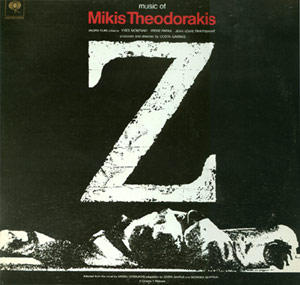
Mikis Theodorakis -- La Course De Manuel (Chase)
Mikis Theodorakis -- To Palikari Echi Kaimo (vocals: Maria Farandouli)
Mikis Theodorakis -- To Palikari Echi Kaimo (vocals: Mikis Theodorakis)
Walking home with a few sacks of groceries, you hear a snatch of music that grabs your attention. You turn to look, and find that the music is coming from a third-story loft, the window up halfway, propped with a board. After awhile you take a seat on the curb and set your groceries down beside you.
You sit fascinated, staring up at the window across the street, and then you notice that a group of wiry muscular heavily tattooed men have formed a half-circle behind you. They're closing in on the sides and they want to know what you're doing there. You point up at the window. The leader turns to look, and then the others follow suit. No one says anything for awhile.
Then, from your right: "I like the girl." You nod.
"I like the man more." This from your left. "It's like he has to try harder, but that makes it better." You nod to this too.
They sit down, one by one. A few songs later, you realize your ice cream sandwiches are probably melting. You open the box and pass them around. It's not enough. You look to see what else you have.
The next week you pass that same spot. The men are all there, hanging out on a stoop chit-chatting. The window across the street is closed. The men watch you approach. You tip your hat. They nod in response. From the back, someone asks if you have any ice cream sandwiches.
...
A bit of background: the last track offered here was one of two bonuses to the LP, which weren't included in the film. The film is a tightly-constructed political thriller about the assassination of a political figure and a government conspiracy to hide it (it sounds like it might be dull, ponderous, belabored--it's not; it's fascinating, fantastic, and should IMHO be well up on the IMDb top 250). At the beginning it's stated that any similarities between the characters and real people are deliberate. It's bold and brilliant work, on both the film and the music. Following the 1967 coup in Greece Theodorakis was jailed and then exiled for his political activities, but Costa-Gavras seems to have escaped that fate. Theodorakis is still alive and apparently going great guns, and no, thank you, I'd rather not debate his political views. :-)
wikipedia writeup on Mikis Theodorakis
Mikis Theodorakis' site
Z page at IMDb.com
[Amazon.com]: An out-of-print double-CD set of four soundtracks, if you have $100 USD you don't know what to spend on.
Labels: is fiction, movies, out of print, soundtrack
posted by Tuwa @
02:10 | permalink |
0 comments
|
 XML
XML


