body snatchers mix, part 5

Lightnin' Hopkins -- Feel So Bad
Acoustic country-blues with Hopkins' distinctive reedy voice and some banging piano backup.
[Blues Kingpins]
Waylon Jennings -- Crying
Jennings is not quite up to the melody; his reach isn't as agile as Orbison's, his touch not as deft. He's like a blackhat hacker whose social engineering fails and so he decides to brute force it. It's inelegant but it works.
[Country Giant @ emusic]
Rebekah Del Rio -- Llorando (Crying)
This one's from Mulholland Drive; supposedly it was a one-take recording, which (if true) is all the more amazing considering how well it turned out. This performance is like an angel, watching mute for six thousand years, then deciding it has something to say about sadness.
[Mulholland Drive: Original Motion Picture Score]
Lee Dorsey -- Tears, Tears and More Tears
Lee Dorsey just sounds so damn affable in his songs, like somebody's hip grandfather in sharp shoes and a fedora, incorrigible, bawdy, a metric ton of fun. He's known for working with Allen Toussaint and also the Meters; this one is a Toussaint production with the bass and muted guitars holding down the rhythm and pianos low in the mix accenting it. The horns are in tiptop shape and the vocals give them a run for their money.
[Yes We Can/Night People]
James & Bobby Purify -- You Don't Love Me
Uptempo soul number from James and Bobby Purify, most known for "I'm Your Puppet." This one's a rowdy track with knockout vocals.
[Shake a Tail Feather]
Bo Diddley -- You Don't Love Me (You Don't Care)
Bo Diddley can sing songs that don't contain the words "Bo Diddley," and they're often good, too. Love the harp on this one, especially the echo, and the pounding piano solo is good too. The song has an interesting structure: several verses, a solo, an outro.
[Bo's Blues ]
Oingo Boingo -- Imposter
This song is not afraid. Not afraid of you, or your mama, or your cyborg from the future with the chip in the head. It's from Only a Lad, an album with a gleefully creepy song about a pedophiles, but this isn't that one. This one's about music critics, who are painted less sympathetically than pedophiles. "You take the credit while others do all the work / You like to think you discovered them first / We all know you moved in after it was safe / That way you can never get hurt / You like to play God / You don't believe what you write / You're an imposter" and later, "Your head is firmly lodged way up your butt / Where it belongs."
[Only a Lad ]
(Discussion of Kaufman's film, with spoilers, follows.)
Philip Kaufman, in his remake of Invasion of the Body Snatchers, changed the setting from a small town outside San Francisco to San Francisco itself: at the start of the film, pods drift up off the surface of a barren planet, float through space, and descend on earth, the Golden Gate Bridge in the background. There they cover various plants with a gelatinous, translucent substance and begin putting out first roots and then flowers.
Elisabeth Driscoll finds one of the flowers, picks it, gets stared at by a teacher encouraging her young students to pick them, and goes home, where she tells her boyfriend Geoffrey that it might be a completely new species of plant that cross-pollinated from two others, something invasive and dangerous. Unlike in the first film and in the text versions, Elisabeth (the Becky character) is not divorced, but there are signs early on that their relationship is in trouble--the first thing Elisabeth says to Geoffrey is "Too much trouble to pick the mail up off the floor, Geoffrey?" She goes over to him and he pulls her into his lap; they kiss, and Geoffrey interrupts it to shout about the basketball game on the TV behind her.
Matthew Bennell, for his part, is not a doctor but a health inspector working for the Department of Health; he angers the wrong restaurant workers with a promise to have their permit revoked and then spends the rest of the film driving a car with a busted windshield. Elisabeth also works at the Department of Health, and though it's not clear if they've dated before, it is clear that they are attracted to each other. This attraction lends a certain tension to the early scenes in the film, when Elisabeth is still trying to make her relationship with Geoffrey work.
For someone who's seen the original film and noticed the teacher's interest in getting the children to take the flowers home it's probably no surprise that the next morning Geoffrey isn't acting like himself, that Elisabeth is curious and alarmed about it, and that Matthew has a psychologist friend with a number of fairly convincing explanations about why they might be imagining things. In this case the friend is David Kibner, played by Leonard Nimoy. It's an unusual casting choice, especially given the success of the original Star Trek series: Kaufman no doubt expected audiences to be unsurprised at his coolly logical demeanor and perhaps to wonder if it's too obvious that he would be a pod person.
Kaufman also makes a few recontextualizations: not just in changing the setting from suburban to urban but also in making explicit comparisons to disease, evolution, and pollution. All of the topics are covered in dialogue, generally more than once; so the subjects are not subtext but text itself. The change in Matthew's job is interesting, as it shifts him from private practice to civil servant, implying a certain amount of faith in the government yet maintaining the character's interest in contagion and infection. And while Jack is still an author (in this film a poet), he and his wife Nancy also own a mud bath. Nancy is explicitly concerned about environmental damage, at one point commenting that they don't know how the aliens invade humans--"We would never even notice it, not from the impurities we have. I mean we eat junk, we breathe junk--" And Elisabeth's interruption: "Look, I don't know where they're coming from. But I feel as though I've been poisoned today. We've got to take those flowers in and have them analyzed. This is the only thing we know; there is something here."
A number of critics and horror fans have commented that the new urban setting doesn't work (Stephen King, for instance, stating in Danse Macabre that Kaufman lost more than he gained in the change), but I suspect that's a matter of taste. Kaufman is not working on the same scale as Siegel or Finney: Finney's story is a somewhat harrowing but ultimately hopeful story. Siegel aimed for something darker--more loss, more betrayals, a grimmer ending--but had a more hopeful ending (or faux-hopeful ending, depending on your interpretation) forced onto the film. Kaufman states very calmly that there is no reason for hope and will be no survivors.
The aliens in this version sweep up and dispose of their human remains, and throughout the film we see garbage trucks compressing grey fluff in clouds of dust. The first vehicle seen in the film is a garbage truck; and the morning after Elisabeth takes home the flower, Geoffrey is already awake, sweeping something up when the alarm clock goes off. He ignores Elisabeth's questions and takes the trashcan downstairs to a waiting garbage truck. They're everywhere in the film, a constant reminder of both consumption and waste.
The film is also concerned with media, like the Siegel version and the various texts: at Matthew's house on top of a hill, Jack can't pick up any radio stations. Matthew tries several times to call for help, and while some of his later calls are intercepted, most of them go through because the people he's contacting have already been changed. They're careful to appear to help, at least until it no longer matters. When it's clear that the aliens are tired of waiting and are going to force the four of them to be changed, Matthew, Elisabeth, Jack, and Nancy flee Matthew's house, chased by a horde of pod people emitting a hair-raising, thoroughly alien, klaxxon-sounding alarm. The four humans run through dark city streets casting giant shadows, chased on foot and by motorcycle police, tracked by helicopter, and once they're cornered Jack decides to split up from them to find help. Nancy runs after him, leaving Matthew and Elisabeth to go in a different direction.
Eventually they hear some music coming from a ship, giving Matthew the idea to sail away. He goes to investigate, as in the previous film; and what he sees is a ship being loaded with pallets of pods. When he returns, Elisabeth has fallen asleep and won't wake up. He tells her comforting lies as her body disintegrates; and then her replacement sits up and tells him he should quit resisting. This scene is similar to the one near the end of the original film, except that in the original Siegel didn't dare show or imply that Becky was naked (most likely the Hayes code wouldn't allow it). As a result, in Siegel's film we're supposed to believe that the pod person came to life, took the clothes off the remains of the original, put them on itself, and then lay down to pretend to be tired for when Miles returned. No, in this one Elisabeth is naked and she doesn't care: not as she stands up, not as she follows Matthew to the greenhouse nearby, not as she walks through it with dozens of workers milling about, paying her no attention whatsoever. Some people take the nudity as gratuitous, but it strikes me as both logically consistent and purposeful, underscoring the complete alienness of the invaders. It's here in the greenhouse that Matthew makes his final stand, destroying some of the pods and causing a fire before fleeing again to hide.
Throughout the film, Matthew and Elisabeth have been the holdouts in government, trying to maintain their humanity against soul-crushing odds. At the very end we see Matthew at work, appearing dispassionate around the pod people, then in his office cutting out an article, as he did at the beginning of the film. And as the pod people begin to leave the Department of Health, Matthew does too: outside, to the plaza where those strange twisted unforgettable trees are growing, where he hears a voice behind him calling his name. It's Nancy. She steps forward, looking stressed and tearful and relieved to find him, and Matthew raises his arm and emits that klaxxon alarm. In a film explicitly concerned with the environment, starring two civil servants, this ending could be read as both a statement about the effectiveness and integrity of government and as a death knell for hippie idealism: the world is doomed; your government will make sure of it.
Labels: blues, body snatchers, country music, horror, movies, RnB, rock, soundtrack
posted by Tuwa @
10:59 | permalink |
4 comments
|

Waylon Jennings -- You Can Have Her
Guest post today from Aesop, a Greek friend since early childhood. Aesop has spent time traveling around the Mediterranean, becoming something of an author along the way. And apparently he shares an affection for outlaw country.Waylon Jennings -- You Can Have Her
One hot summer's day a Fox was strolling through an orchard till he came to a bunch of Grapes just ripening on a vine which had been trained over a lofty branch. "Just the thing to quench my thirst," quoth he. Drawing back a few paces, he took a run and a jump, and just missed the bunch. Turning round again with a One, Two, Three, he jumped up, but with no greater success. Again and again he tried after the tempting morsel, but at last had to give it up, and walked away with his nose in the air, saying: "I am sure they are sour."
[Lonesome, On'ry and Mean]
Thanks, Aesop. I had no idea Jennings was popular in Greece.
...
R.I.P. Sid Davis. The NPR piece is rather odd--they cover a man making films about drug abuse, venereal disease, kidnapping, date rape, murder, gang war, and a teenager who brings a gun to school, and then conclude with something about the "good old days," which is kind of amazing considering the piece isn't by FOX News.
Clue-less crossword. After you play a few rounds, it gets easier because you notice their limited vocabulary. Expect "kiwi," "electricity," and "astrology."
Genetically Engineered Crops May Produce Herbicide Inside Our Intestines. Awesome. Too bad I don't have kudzu growing in my small intestine.
Labels: country music, is fiction
posted by Tuwa @
12:01 | permalink |
3 comments
|
Musical Family Tree
Chevy Downs -- Jesus, Heal My HangoverFar be it from me to say someone was doing miracles by halves, but it's written that Jesus turned water into wine yet there's no record of him healing anyone's hangover. Chevy Downs wants to set that straight. They want to set that straight with a bluegrass stomp, because Jesus is a sucker for catchy music, especially if it makes him tap his foot in a steady two-four beat underlying some fancy fretwork.
[Chevy Downs' site]
Tremendous Fucking -- Every Fucking Time I Believed In You
This song sounded somehow familiar when I first heard it, so of course I had to grep the hard drive to see if it had been posted as part of John's "Fuck" mix (starting here and going through the next four posts). Apparently not. The song is a cross between The Pixies and being thumped by the Hulk. And there's someone else it reminds me of, but I can't place it.
[TremFu's site]
Both of these tracks are releases from Musical Family Tree, which focuses on indie music in Indiana. Their CD release Delicious Berries is ace, but neither of these tracks are on it. (Highlights on the disc include Heidi Gluck's "Wake Up,"Brando's "Your Nelson Now," and Emperor Penguin's "Overboogie," but there's enough diversity on the disc that everyone will probably have different favorites.
Labels: country music, PR, rock
posted by Tuwa @
00:27 | permalink |
0 comments
|
Metafilter Music
A new branch of the Metafilter family: as if Ask Metafilter and Metafilter Projects weren't cool enough, mathowie recently resurrected Metafilter Music. Some picks from that, then: (I'm posting these here because Matt already mentioned high bandwidth bills and I don't want to leach off his bandwidth; if you like the tracks please consider sending the original authors a message.)Diamond Joe, a drunken country tune with fiddle, acoustic guitar, galloping drums, and drunk musicians. A match made in heaven. Greg Nog at Metafilter nails it: This is what whisky would sound like, if whisky was music.
["Diamond Joe" @ HiFi)]
[No site for this band? Was this a one-off? Say it ain't so, Jack; say it ain't so.]
Criminal is slow, moody, deliberate work with a subdued vocal melody. The guitar cuts in with a muted intensity like a bright painful memory announcing itself in the middle of a stunned grief. The song is not for all moods, maybe, but damn is it beautfiul.
["Criminal" @ HiFi)]
[Edlundart's site]
Light On is folksy jangly acoustic pop in waltz time, with an accordion that sneaked out of City of Lost Children so it could come pick your soul up and dust it off and straighten its tie. Everyone should have a neighbor who plays accordion.
["Light On" @ HiFi)]
[No site for Chococat?]
Making Me Nervous is a bouncy electro-pop tune rivalling "Diamond Joe" in energy, except "Diamond Joe" makes me want a beer and a concert and "Making Me Nervous" makes me want to dance down the street singing badly and making an ass of myself. I've listened to this song half a dozen times trying to figure out what it is I like so much about it--is it the snap in the percussion? The ridiculous fake bassline? The distorted guitar? The driving beat? ... Frenetic says it's ironic, which is fine, but I thought I was tired of irony and apparently I'm not.
["Making Me Nervous" @ HiFi)]
[Brad Sucks' site]
No More Room in Hell is one of my favorites so far, a jaunty tune with banjo, tuba, and vaudevillian vocals, like a cross between Squirrel Nut Zippers and Triplets of Belleville. This is the happiest apocalypse I've ever heard.
["No More Room in Hell" @ HiFi)]
[The Scarring Party's site]
Labels: country music, dance, indie, pop, rock
posted by Tuwa @
01:18 | permalink |
2 comments
|
To Daddy
Dolly Parton -- To DaddyEmmylou Harris -- To Daddy
I love Emmylou Harris and Dolly Parton both, and I rarely post anything by them. Not sure why; maybe it's just feeling I have little to say about them that hasn't been said before and beter.
A conversation, about "To Daddy."
Me: This song is awesome.
C: It's sad.
Me: But it's real.
C: Of course it's real.
Me: [amused, tired] You know what I mean.
C: Yeah.
Me: Yeah.
C: ...
Me: ...
It's the kind of thing that leaves me in a mute appreciation that's hard to break. I think Harris handles the song better, though Dolly Parton wrote it: Dollly's version is ostensibly sweet, probably because of the instrumentation, and it nearly fails for it--it's easy to mistake as something slight and inconsequential. Harris' version feels different, probably because of the backbeat and the guitar; it's bittersweet, melancholy, weighted with a grief hinted at but left unexplored. Musically, it's a marvel of economy and precision and--for me, at least--it engages the imagination more, inviting empathy in a way that Parton's doesn't. It's a neat trick, given that they have the same lyrics.
[The Essential Dolly Parton One: I Will Always Love You]
[Quarter Moon in a Ten Cent Town]
Labels: country music
posted by Tuwa @
00:37 | permalink |
3 comments
|
old shoes and a box of rocks that don't belong together
The Darts -- PeachesJoe Sun w. Shotgun -- (Home Away from Home) I'll Find It Where I Can
David Griggs -- Satan James
Been feeling under the weather lately.
Here are some tracks I posted about a year ago, when I was using Yousendit (why? I don't know. Rev. Frost's site was the only one I ever bothered with yousendit links on.)
Darts writeup.
Joe Sun writeup.
The David Griggs writeup was subpar, even by my standards. I like his voice and also the harmonizing backup vocals; and the guitar work is ace. I'm not sure I understand all the story, but that never stopped me from liking a song before.
These are all out of print--ephemera. (Shane! Come back!)
Labels: country music, ephemera, out of print, RnB
posted by Tuwa @
23:30 | permalink |
4 comments
|
Kleptones & Patsy & offers you can't refuse
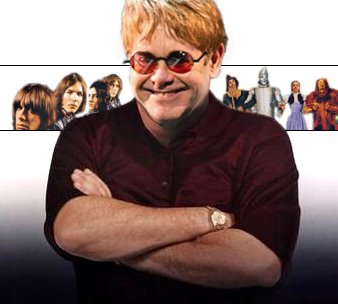
The Kleptones -- Down on Bennies
Patsy Cline -- You Made Me Love You (I Didn't Want To Do It)
The Kleptones have released another mashup album--it doesn't impress me as much as From Detroit to J.A., but it's got some tracks I like a lot (like "10:25 Sixteen Sisters," once it starts, and "21:00 Uptight Jet"). And then there's this one, which takes the vocal from "Bennie and the Jets" and puts it over some grinding distorted guitar (at least some of it from The Stooges' "Down on the Street"), making Elton sound like the don of the gay mafia that Will and Grace apparently says he is.
The rest of the mashups remind me of the notes of a brilliant professor: an elliptical mention inside a matchbook, an uncited half-erased quotation, a mathematical proof ranging from one side of a sandwich wrapper to the other, carried over to the back of a FedEx envelope. I wonder how they'd do with a bit more focus. (Exhibit A: the "Superstition"/"Sledgehammer" tease is, well, a tease. It works beautifully, what little there is of it; it deserves a full track.) But it manages to make Phil Collins sound interesting, which is no mean feat.
Patsy doesn't need an introduction, does she? An amazing voice, a staple of music collections.
[The Kleptones -- 24 Hours]
[Patsy Cline -- True Love: A Standards Collection]
Labels: country music, plunderphonics
posted by Tuwa @
00:40 | permalink |
2 comments
|
Train, Train
Dolly Parton -- Train, Train
Gar. Got a little behind on real-life obligations and now they're giving me what-for.
Take, it Dolly.
"The engine is in the fiddle. You can hear it steaming up, the wheels beginning the slow chug, then it's off and downhill--around a bend, over a steel-girdered bridge, sunlight reflected, rippling, setting. The harmonica is the steam blast, the horn, the warning outside of town. The banjo tells you there's a party in the dining car, and I hope you'll come join it."
Thanks, Dolly. And good luck with your new man.
[Amazon.com]
Labels: country music
posted by Tuwa @
14:32 | permalink |
0 comments
|
Half as much
Charlie Rich -- Half As MuchCharlie Rich -- There's Another Place I Can't Go
Charlie Rich: country/rock/pop/soul/R&B singer/crooner/wailer, and a mite more soulful than most country singers. But Rich probably doesn't need an introduction. I'm impressed with the way he mixes genres so seamlessly; plus he can sing, without aid from a computer program, which is always a plus.
"Half As Much" tells a story of a man who's convinced that his woman takes him for granted. It's a
The LP was re-released as half of a double-disc set; the other disc was all R&B. I didn't manage to pick up that disc; it's gone out of print now, and at $50 for the set I think I'll stick with the slightly muddy sound.
"There's Another Place I Can Go" is off Feel Like Going Home: The Essential Charlie Rich, which is still in print and has some fantastic tracks on it. It's about a relationship that's already over, the man left behind hurt by memories and feeling constrained by everything he has to avoid. It has a nicely understated bass line, some muted guitars, some wonderful organ and backup vocals; it would be easy to make it mournful and dirgelike, but the approach here is light and deft.
[Feels Like Going Home: The Essential Charlie Rich @ Amazon.com]
*Actually, it was written by Curly Williams and, yes, performed by Hank Williams and on a number of his recordings, but it was also covered by Patsy Cline, Rosemary Clooney, Ray Charles, and a number of others.
Labels: country music, out of print
posted by Tuwa @
01:10 | permalink |
0 comments
|
One Sweet Hello / If Hollywood Don't Need You
Don Williams -- If Hollywood Don't Need You (Honey I Still Do)Merle Haggard -- One Sweet Hello
And one sad goodbye. This is a concise telling of one of the oldest stories in the book: meeting, falling in love, falling out of it. Love and loss and lingering memories. Merle Haggard has a perfect voice for it, and the violin suits it well.
This is off the Someday We'll Look Back half of Haggard's Someday We'll Look Back / I Love Dixie Blues... So I Recorded "Live" In New Orleans double disc collecting two of his earlier albums; Haggard's had a long career with a number of ups and downs, but I think these two albums are definitely on the up-side.
"If Hollywood Don't Need You (Honey I Still Do)" is another about a relationship that's ended: the singer's girlfriend has moved to L.A. to pursue a career in film; he still burns a candle for her. The song was written by Bob McDill and, like most of Williams' work, it's warm, mellow, and tender, a bit melancholy and wistful. The singer doesn't bear her any ill will; he hopes she succeeds; but he'll be waiting just in case.
This one is available on a number of Williams' compilations, including 20 Greatest Hits; I have his volume 1 and 2 on CD as well a few scattered cassettes and LPs. (I think I Believe in You is all-around fantastic but, then, I'm just very fond of Don Williams' work.)
20 Greatest Hits: Amazon.com | allmusic review
Someday We'll Look Back/I Love Dixie Blues: Amazon.com | allmusic review
Labels: alt country, country music
posted by Tuwa @
11:25 | permalink |
0 comments
|
Joe Sun with Shotgun
Joe Sun with Shotgun -- One TimersJoe Sun with Shotgun -- Home Away from Home (I'll Find It Where I Can)
Joe Sun with Shotgun -- A Little Bit of Push
In a hardware store today to try to match some hex-head screws for a super-sturdy bookcase, I noticed the far wall was completely lined with bins of LPs. This was a good find. $1 apiece, and it had some gems. I spent hours looking through them, found obscure bands from Brussels and from New Zealand, and a few classics (Bill Withers -- Still Bill) in fair shape. This one was one I picked up on a whim. Supposedly you can't judge a book by its cover, but I judged the LP by its cover--thought to myself "I bet this guy's got some solid music." It wasn't until I got home that I noticed the blurb from Johnny Cash:
Joe Sun is the greatest new talent I've heard in twenty years. His style is unique, his songs are super. He is in a class all by himself, and he's first class. If he continues to keep his individuality, and always remembers who he is, what he is, and where he's going, he will soon be one of country music's biggest names and with his diversified talents could become one of the all time greats in country music.
Allmusic.com doesn't have an entry for him--bio or discography--but countryworks.com does. Sounds like an interesting character, though he never had the level of success, on his own material, that you'd hope for after hearing the LP. As far as I can tell his music's all out of print, though I'd be glad to find otherwise.
"One Timers" is about loneliness, real friends, and fair-weather friends. The steel guitar's tip-top; the rhythm rolls along nicely; and the flourishes from the backup female vocalist make for nice icing.
"(Home Away from Home) I'll Find It Where I Can" is another track about loneliness, though this one is to a S.O. and is threatening infidelity. According to allmusic.com it was written by Michael Clark, and Jerry Lee Lewis covered it the year before Joe Sun (Waylon Jennings followed suit a few years later). I like it, though I'm not in favor of cheating in general. It's a bold, brassy track, not one to put up with any shit.
"A Little Bit of Push" isn't a saucy disco track, though it might sound like one. No, it's about dreams: working towards them and not. Tells a nice story, but then, success almost always makes for a nice story. It's in sort of a Charlie Rich/Harry Chapin vein (but with better singing than Chapin can muster). Again, the music's good enough but Sun's backup vocalists (Suzee Waters, Lea Jane, Phoebe King) make it all the better.
These songs should all have been big radio hits but weren't.
... On another note entirely, Murder on a Sunday Morning. Dayum. Greatest film I've seen in a long time. 'nuff said.
Labels: country music, out of print
posted by Tuwa @
23:09 | permalink |
8 comments
|
David Griggs
David Griggs -- Peace and Loving UnderstandingDavid Griggs -- Satan James
David Griggs -- Speak
I found these on an LP in my roommates' crates called Time to Listen, a debut compilation from Tallahassee FL-based label Sweetbay Records. There's no information about any of the artists on the record or in the liner notes aside from a photo, a sketch, and what instruments they played; and allmusic.com doesn't know anything about Griggs except that he was a folk singer. He looks to be in his mid-twenties in this photo from 1975.
So anyway. These are by David Griggs. The first one sounds like a bit of classic soul (reminds me a lot of that track on the documentary Weather Underground, during one of the driving scenes--a track which I foolishly forgot to look up in the credits; it sounds very familiar but I can't quite place it). At any rate.
The next two songs are country/rock/folk. Picture if Roy Orbison and Chris Isaak had a baby. Well, but Griggs was born before Isaak. So maybe Griggs and Orbison had a baby, but Isaak ran away from home so he could be forlorn in new digs. (Sure, I like to knock Isaak, but I have a couple of his CDs too.) ... I do think these tracks are good, else I wouldn't post them. "Satan James" has sort of a timeless sound to it, the kind of song it's easy to imagine in a Kenny Rogers film; and "Speak" would be perfect for a period western/comedy honkytonk.
I'm guessing the label went bankrupt (zero hits on Google), but it's a pity we didn't hear more from Griggs. I would have loved to see a career spread out before him and I'm curious what happened.
Labels: country music, out of print, rock
posted by Tuwa @
23:50 | permalink |
1 comments
|
two from Willie
Willie Nelson and Johnny Cash -- Funny How Time Slips AwayWillie Nelson -- Too Sick to Pray
Melancholy bit of country here with Willie Nelson and Johnny Cash, two kings of country--experts at what they do, simultaneously modest and badass. Nelson starred in Honeysuckle Rose, but I've also seen him in bit parts in various indie movies, and always thought that was cool--not because he could act, but because he'd take bit parts that can't pay well.
Nelson's played with Cash before, in The Highwaymen (with Kris Kristofferson and Waylon Jennings), in the mid-1980s before his IRS troubles. There's a lot to pick from over his career; his 1970s work is vital and awesome (but I grew up with it, so I would have that fondness for it anyway), but some of his more recent stuff is just as compelling, especially in the last decade.
"Too Sick to Pray" is a country waltz about spiritual alienation and reconciliation; the track comes from Spirit, a spare album that Nelson self-produced. His next album, Teatro, which Daniel Lanois produced and Emmylou Harris guested on, got a lot of well-deserved attention; but I think there's a simple beauty throughout Spirit that could do with some more attention as well. Most of the tracks on it are just Willie's beat up old nylon-stringed guitar, his voice, a piano, a steel-string guitar, and maybe a violin; the first half is mostly about loss; the second half is mostly about determination, love, and hope. Remarkable work, and it covers enough that the title could refer to either faith (the holy spirit) or the human spirit.
[Amazon.com]: Willie Nelson & Johnny Cash: VH1 Storytellers
[Amazon.com]: Willie Nelson: Spirit
Labels: country music
posted by Tuwa @
01:58 | permalink |
0 comments
|
the spiritual and the secular
Emmylou Harris -- Wayfaring StrangerEmmylou Harris -- Red Dirt Girl
I've been wanting to post about Emmylou Harris since I started this ... longer than that, really--ever since Sean at Said the Gramophone asked me to guest blog last month. But most people I play Emmylou for have decided ahead of time that they don't want to hear it (it's the same way with Don Williams). I'm not sure why; maybe most country music carries a stigma with it, the way hip hop used to (does still?) (Johnny Cash is badass enough to make country cool; most others fail for some reason). And that's a huge issue I'd rather not get into--various prejudices--let's just say I think more often than not people miss something cool by holding fast to rigid expectations. So I'm going to post a few country songs. It might not be your cup of tea, and I might scare everyone off, but I genuinely love these songs and think they have a larger appeal that's gone untapped.
What's cool about Emmylou Harris? Well, she does what she wants; she's charted a course of her own, exploring country, bluegrass, gospel, and pop, but she's done it without negating anyone else. She can point out differences but she's modest and respectful, accepting and unpretentious. She's open with her feelings: not afraid to be vulnerable, not pretending she's never hurt. But all this wouldn't amount to much more than an extraordinary woman if not for the singing. With the singing, she's an extraordinary woman who can knock your socks off.
"Wayfaring Stranger" is a traditional song with a modern arrangement, describing life as a journey through a painful world, the narrator focused on a Heavenly destination. The song is from Harris' 1980 bluegrass album Roses in the Snow, which faced some resistance at her label before finally being released and quickly going gold. I think Harris's singing and Ricky Skagg's harmonizing are both beautiful, and the fiddle and mandolin are nice touches, but that dobro--wow. It's understated and brief; it could preach at length, and I wish it would. But, like the narrator, it's in service of a higher purpose; it does its part and says farewell. The song is lovely and confident in its optimism (or is it fatalism?) It's enough to make an agnostic sit up and question lack of belief.
"Red Dirt Girl" is the title track from Harris' 2000 country-pop album and is, thematically, the polar opposite. It's a song about discontent and thwarted ambition, about being trapped by your finances, settling for less and trying to forget that you've done so. The lyrics were inspired by Boys Don't Cry, but the basic story is much different. The song definitely feels true; and I think there's something to be said for Emmylou Harris' skills as a lyricist ("Michelangelo," "Bang the Drum Slowly," and "My Antonia," off that same album, are also excellent).
Fan site with a brief biography and discography
[Roses in the Snow]
[Red Dirt Girl]
Labels: country music
posted by Tuwa @
01:36 | permalink |
0 comments
|
 XML


